
Deobandi Mughaltay | Urdu
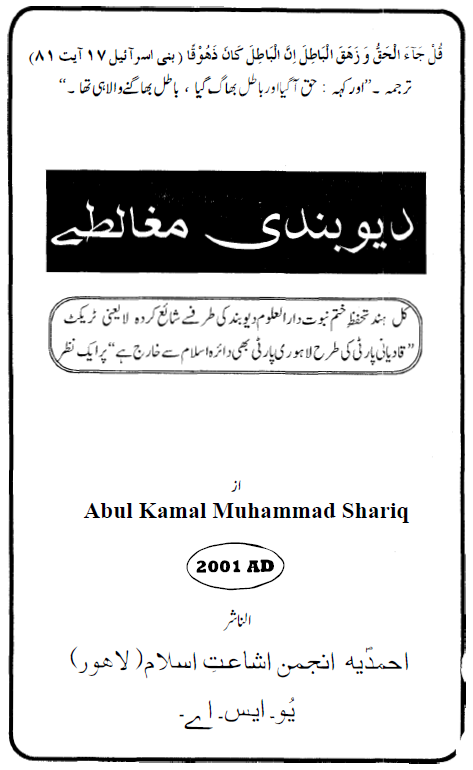
Name of the book: Devbandi Mughalate (Deobandi Deceptions)
Language: Urdu
Author: Abul Kamal Muhammad Shariq
Publisher: Islam For All Mankind
Glimpse: A scholarly refutation of Deobandi claims against the Lahori Ahmadiyya Movement. This treatise explores the influence of Mirza Ghulam Ahmad on Deobandi leaders and clarifies theological stances on the finality of prophethood and divine revelation.
Language: Urdu
Author: Abul Kamal Muhammad Shariq
Publisher: Islam For All Mankind
Glimpse: A scholarly refutation of Deobandi claims against the Lahori Ahmadiyya Movement. This treatise explores the influence of Mirza Ghulam Ahmad on Deobandi leaders and clarifies theological stances on the finality of prophethood and divine revelation.
Description
📘 Book Description
Published in 2001, Devbandi Mughalate (Deobandi Deceptions) by Abul Kamal Muhammad Shariq is a comprehensive theological response to Deobandi efforts to exclude the Lahori Ahmadiyya movement from the fold of Islam. The book specifically addresses a booklet by Maulana Muhammad Idrees Qasmi, providing a point-by-point rebuttal of the “cunning war of references” used against the Lahori party. A central theme of the work is the documentation of the alleged deep influence Mirza Ghulam Ahmad had on prominent Deobandi leaders such as Maulana Ashraf Ali Thanwi and Maulana Qasim Nanotwi.
Shariq provides side-by-side textual comparisons to suggest that portions of Deobandi literature were directly inspired by or copied from earlier Ahmadiyya writings. Beyond polemics, the source delves into the intricate definitions of Nabuwat (prophethood) and Wahy (revelation). It clarifies the Lahori position on the finality of prophethood, explaining the distinction between the ended prophetic revelation (Wahy Nabuwat) and the continuing revelation of saints (Wahy Wilayat), and the role of a Muhaddath (a non-prophet spoken to by God). It concludes by highlighting the global missionary and academic contributions of the Lahore Ahmadiyya Society in defending Islam against external critics.