


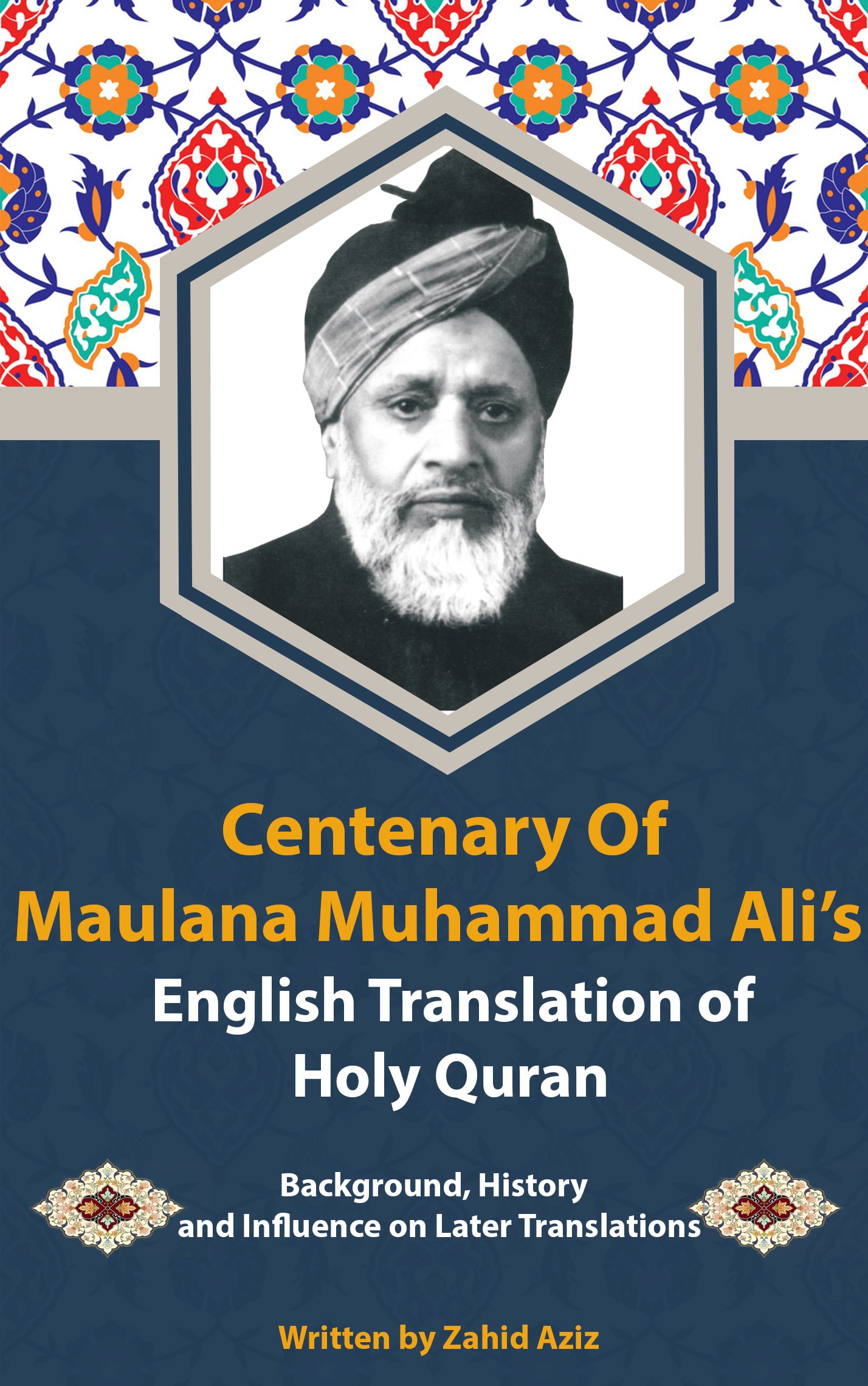
Centenary of Maulana Muhammad Ali’s English Translation
Name of the book: Centenary of Maulana Muhammad Ali’s English Translation
Language: English
Author: Zahid Aziz
Publisher: Ahmadiyya Anjuman Lahore Publications, U.K.
Glimpse: This book details the history and legacy of the first English Quran translation by a Muslim published in the West. It explores its scholarly principles and its massive influence on later works by Pickthall and Yusuf Ali.
Language: English
Author: Zahid Aziz
Publisher: Ahmadiyya Anjuman Lahore Publications, U.K.
Glimpse: This book details the history and legacy of the first English Quran translation by a Muslim published in the West. It explores its scholarly principles and its massive influence on later works by Pickthall and Yusuf Ali.
⬇️⬇️ Detailed Description Given Below ⬇️⬇️
Description
📘 Book Description
To mark the 100th anniversary of a landmark in Islamic scholarship, this book provides a comprehensive history of Maulana Muhammad Ali’s 1917 English translation of the Quran. The work was the first of its kind by a Muslim to be widely available in the West, breaking a long-standing taboo against translating the Holy Book into non-Arabic languages. The author, Zahid Aziz, traces the project’s inspiration to Hazrat Mirza Ghulam Ahmad, who sought to present a true picture of Islam to the English-speaking world to counter contemporary misconceptions. The narrative follows the seven-year “taxing labour” (1909–1916) required to complete the first edition, much of it conducted under the guidance of the scholar Maulana Nur-ud-Din.
A central focus of this volume is the profound influence this translation exerted on subsequent Muslim translators. The text provides evidence that works by Marmaduke Pickthall and Abdullah Yusuf Ali were heavily indebted to Maulana Muhammad Ali’s research and footnotes. It also reveals the origins of the “Shakir” translation, identifying it as a modified version of the 1917 text. Finally, the book covers the thorough 1951 revision completed just before the Maulana’s death, which continues to serve as the basis for modern editions today.